
- About DWIN
-
- contact info
- Join DWIN's YahooGroup
- Visit DWIN on Facebook


November 07, 2015
Five Rounds Rapid

We thought of doing two entries for this episode in honour of Osgood, but in the end, we decided against that plan. Much like certain characters in this episode. But what did the viewers think? Some are calling it the best episode of the season. Some are not. Some have called it so and then shifted their opinions. That seems fairly appropriate given the subject matter of the episode.
We thought of doing two entries for this episode in honour of Osgood, but in the end, we decided against that plan. Much like certain characters in this episode. But what did the viewers think? Some are calling it the best episode of the season. Some are not. Some have called it so and then shifted their opinions. That seems fairly appropriate given the subject matter of the episode.
Which one of the above paragraphs was written by a human and which by a Zygon? I refuse to answer that question. In the meantime, feel free to enter your comments in the section below. Both of you.
Posted by Luca on Saturday, November 7 at 11:08 pm
October 31, 2015
Keeping the Peace
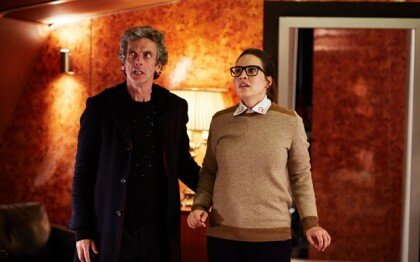
We know Osgood is a huge fan of the Doctor. The question is we are asking though is whether you are a fan of The Zygon Invasion, by my count a sequel to at least three different Doctor Who stories (and that’s before we count the reference to Mawdryn Undead. Some stunning revelations - such as the first description in over 52 years of the Doctor’s underpants. Let us know in the comments section below what you though, and please tell us the truth - or there will be consequences.
Posted by Luca on Saturday, October 31 at 7:41 pm
October 24, 2015
Stand and Deliver
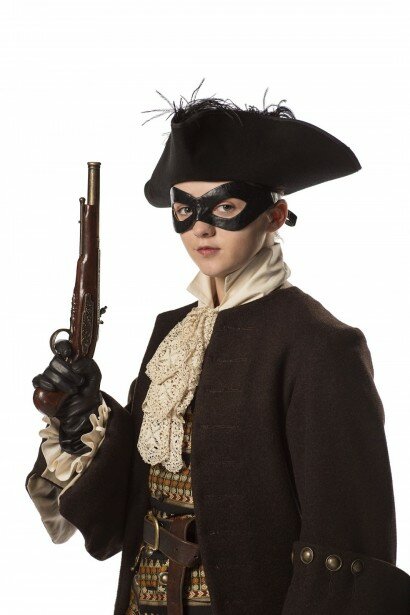
Stand and Deliver - your comments or your life! Well, no we don’t want your comments on The Woman Who Lived that badly, but we definitely would like them. And not just on the episode, but what people thinks the ending might mean for the rest of the season. How are people taking to the Sonic Sunglasses? How about the Doctor playing the guitar every story so far this season? And how about move to two-part stories as the norm this year (90 minutes in length, equivalent to a classic series four-part story). The topics are as endless as Ashildur’s life seemingly is. Or is that Me’s life? And how cool was that nod to The Visitation?
Posted by Luca on Saturday, October 24 at 9:09 pm
October 17, 2015
Arya’s and Sympathies
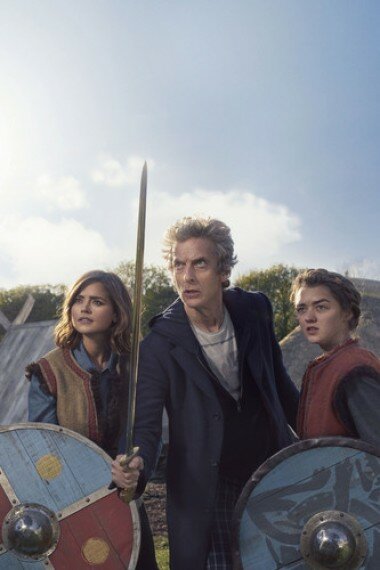
By Odin, we are looking for your comments on The Girl Who Lived! Give us your Stark opinions - was this episode good or did it give the show a reputation worthy of the Benny Hill show - or both? Either way, the story is not over yet…..
Posted by Luca on Saturday, October 17 at 9:06 pm
October 11, 2015
Look, Here Comes the Flood
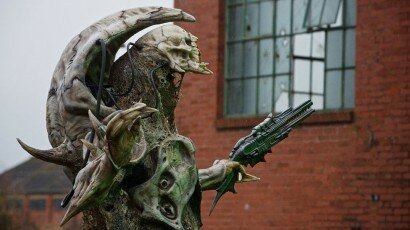
But don’t just let us know what you thought of this moment, also let us know what you thought of the episode Before the Flood occurred, and after it too. We want your opinions on the entire episode, the entire story and Beethoven’s music while you are at it. Let us know in the comments section below.
And hands up those of you who prefer the version of opening theme music used in this episode…....
Posted by Luca on Sunday, October 11 at 2:24 am
October 04, 2015
In and Around the Lake

In and Around the Lake
Apparitions Come Out of the Walls
And They Don’t Stand There.
Yes, this is a roundabout way of asking you what you thought of the first part (Under the Lake) of the latest Doctor Who story. Let us know in the comments section below.
Posted by Luca on Sunday, October 4 at 9:50 am
September 26, 2015
A Favourite Which is Familar

New twist on an old familiar favourite or a re-hash of past glories? Or neither (but not Nyder)? We’ll let you decide. Let us know if you loved the episode or if you didn’t like it. And if you didn’t, don’t be afraid to show some mercy.
Posted by Luca on Saturday, September 26 at 9:00 pm
September 19, 2015
The Axeman Cometh

We will return to the companions departure entries shortly, but how was that for an electric opening to the new season? Let us know your thoughts below in the comments section. For those curious, here’s a list of musical instruments played on screen per Doctor:
1st Doctor - Lyre (The Romans)
2nd Doctor - Recorder (throughout his tenure and The Three Doctors)
4th Doctor - reed flute (The Power of Kroll)
5th Doctor - harp (The Five Doctors)
6th Doctor - organ (Attack of the Cybermen)
7th Doctor - spoons (Time and the Rani)
9th Doctor - alien synth instrument (Dalek)
10th Doctor - church organ (The Lazarus Experiment)
The 11th Doctor does not play an instrument on screen although he does enter the TARDIS carrying a euphonium having apparently just played it in Night and the Doctor: Good Night , a DVD-only mini-episode on the Complete Sixth Series box set.
But let’s get back to your thoughts now
Posted by Luca on Saturday, September 19 at 6:20 pm
August 28, 2015
The Companion Departures - #7 - Susan

Susan’s departure was the very first of any of the companions, or for that matter, the regular cast. This departure set a template for companion departures and thankfully it was a very good template - arguably one that the series has not consistently lived up to. It certainly wasn’t an abrupt departure or one that we couldn’t see coming as her departure story progressed. Even the Doctor notices that Susan is starting to listen to David rather than to her grandfather, and the classic “and don’t stop pick daisies” line in episode 6 is both hilarious and quite telling. It is arguably the polar opposite of how Leela’s departure for romantic reasons was handled some 14 years later in The Invasion of Time.
Interestingly, it is often forgotten that it actually wasn’t Susan’s choice to leave - it was the Doctor’s choice to leave without her and make her decision to stay with David for her. This of course led to one of the all-time greatest moments in Doctor Who history, a moment which has only increased in greatness, significance and stirring the heart-strings as time has gone by - the Doctor’s speech that was to be used in both The Five Doctors and An Adventure in Space and Time. “One day, I shall come back. Yes, I shall come back. Until then, there must be no regrets, no tears, no anxieties. Just go forward in all your beliefs and prove to me that I am not mistaken in mine.”
For that reason alone this is one of the best companion departures ever.
Posted by Luca on Friday, August 28 at 7:33 pm
July 19, 2015
The Companion Departures - #9 and #8 - Ian Chesterton and Barbara Wright
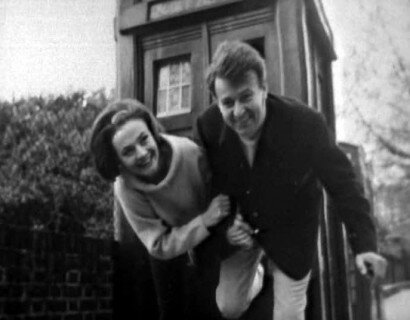
One of the most interesting things about this departure is how much angrier the Doctor is that Ian and Barbara are leaving versus how emotional he was when his own granddaughter, Susan, left (which, at the time of this dual departure in The Chase, had been the only companion departure story to compare this one to). There are several explanations for this - for one, there is (apparently) an element of danger in Ian and Barbara’s return home using the Dalek time travel machine (though one wonders how much the Doctor was exaggerating the danger given the efficiency of the Dalek machine because he really didn’t want Ian and Barbara to leave). Secondly, and perhaps more significantly, we have to remember that it is the Doctor who chooses for Susan to leave rather than Susan making the choice herself (though obviously she was conflicted) - this is actually the first instance we see of companions choosing to leave the Doctor of their own accord. Based on the evidence, the Doctor doesn’t seem to take very well to people choosing to leave him, even those people who forced themselves upon him. Look at the contrast between the Doctor calling Ian and Barbara “absolute idiots” for wanting to leave him and return home, while he sounds positively victorious when Vicki tells him that she doesn’t want to go with Ian & Barbara but to stay with him. These are some of the most “human” emotions that we see the Doctor exhibit in the series.
The use of the “time television” throughout the story is clever - it functions as a simply “wow, wouldn’t that be cool to have one of those in the future” sci-fi idea fictionally realized, it serves as a plot device to give the Doctor and Barbara warning that the Daleks are after them, and at the end it allows the Doctor and Vicki to watch Ian and Barbara’s arrival on Earth and thus know that they arrived safely. Ian and Barbara’s final scenes are perfectly charming (interesting choice to have them return to the then-present day of 1965 rather than 1963) and its fun to think that although they look to the skies and thank the Doctor, unbeknownst to them, he does actually hear and see their goodbye message somewhere out there in space.
A planned cameo for William Russell as Ian Chesterton in The Day of the Doctor didn’t happen because Russell was ill for the scheduled filming dates, but his name does feature again at Coal Hill School as the School Governor in that story, and given that Clara has quickly managed to get a job as a teacher at that school, one imagines that the Doctor talked to his own chum Ian and helped to get her the gig.
It was a fitting tribute in the 50th Anniversary story to one of original cast members, and its nice to know that arriving two years out from their initial departure in 1963 didn’t damage his career with the school in the end. We’d like to think of the same thing for Barbara. Their departure had nothing wrong with it - it was logical, emotional, bittersweet and ultimately joyful. That is why it is one of the best.
Posted by Luca on Sunday, July 19 at 5:25 pm

The Doctor Who Blog is a collaborative weblog put together by the people at the Doctor Who Information Network that bring you Enlightenment, the most dangerous Doctor Who fanzine in the world.
The Doctor Who Blog's mission is to provide witty and insightful commentary on the world of Doctor Who in all its various forms. And to make several bad puns and references to jokes Tom Baker once made.
To Monthly Archives
Recent Entries
- Happy 53rd Anniversary
- Top of the Class?
- Fan Myth RIP #3 - Celebrity Guest Casting is and was “bad” for Doctor Who
- Animated Curiosity
- Fan Myth RIP #2 - William Hartnell Was Playing Himself
- Fan Myth RIP #1 - Continuity Kills
- Head of the Class
- The Companion Departures Extra: Clara Oswald
- The Companion Departures - #1: Adric
- The Companion Departures - #2: Jo Grant
- The Companion Departures - #3: Victoria Waterfield
- The Companion Departures - #4: Romana
- The Companion Departures - #5: Perpugiliam (Peri) Brown
- The Companion Departures - #6 - Nyssa
- Coming up Sixes