
- About DWIN
-
- contact info
- Join DWIN's YahooGroup
- Visit DWIN on Facebook


March 22, 2016
The Companion Departures - #3: Victoria Waterfield

If there was a winner for most under-rated companion departure, Victoria’s would win. A large part of this stems from the fact that her departure takes place in Fury From the Deep, a story that most Doctor Who fans haven’t seen or listened to the soundtrack to since the entire serial is currently missing from the BBC archives, barring a handful of clips. For those unfamiliar with it, this six part story has an unusual ending in that the adventure ends with about 10 minutes to go in the episode. The rest of the time is spent focusing on Victoria and he decision to either leave with Jamie and the Doctor as per usual or to leave them and stay in contemporary England. Its one of the rare occasion where the Doctor and his companions actually stay after the adventure to have a celebratory dinner with the guest characters and on top of that the Doctor and Jamie even stay an extra day in case Victoria (who decides during the dinner that she wants to stay in contemporary England) decides to change her mind. But, much to the chagrin of Jamie, she decides not to.
This departure is definitely a logical one for the character - Victoria never really sought adventure, but joined the Doctor after she was kidnapped by the Daleks and orphaned by them once they killed her father. The Doctor and Jamie took her on board the TARDIS and became father and brother figures for her, respectively. By the time we reach Fury From the Deep, she’s simply got extremely weary from being constantly being kidnapped, hypnotized or terrorized by villains and monsters (something that happens in her previous four stories - in fact, the story where she is least victimized is arguably Tomb of the Cybermen, where Kaftan “merely” pulls a gun on her after she has drugged her). After the latest harrowing adventure, you can understand why a girl that was never looking to travel the universe and fight monsters would want to take a break from it, even if it meant saying goodbye to her adopted family.
While the motivation for the departure was certainly original at the time and not often repeated (Tegan’s is probably the closest) and definitely is appropriate and logical for the character and her development, that’s only a mere part of the reason why this is ranked so high. A bigger part of the reason actually has to do, ironically, with the other companion in the TARDIS at this time - Jamie. It’s Jamie’s heartfelt - and heartbroken - reaction to Victoria deciding right in front of him to leave the TARDIS - that pushes this further up the charts. Because while Victoria saw Jamie more of a brother figure, he was always in love with her, and it is easily the top unrequited love story between companions. We have to remember that Jamie first rescues Victoria from the Daleks because he’s fallen in love with her (based on a portrait of her mother which is strikingly similar to what Victoria looks like - although it’s not as though he changes his mind when he actually meets her). Getting a chance to play the hero in that story, you can see the pride in his face and the tone of his voice when he helps to offer her security and shelter in the opening minutes of Tomb of the Cybermen (which takes place immediately after the end of The Evil of the Daleks, her debut story). From there, he is extremely protective of her while at the same time not shying away from his interest and his attraction to her. For example, he playfully suggests to Victoria that she should show a lot more leg in The Ice Warriors, and he describes her as “very pretty” in The Enemy of the World (a story in which he also voluntarily calls her his girlfriend as part of a cover story for infiltrating Salamander’s palace, even though he could easily have said it was his sister or a cousin).
As such, it comes as no surprise that when the Doctor asks Victoria whether she wants to stay, Jamie is adamant that she “can’t” and is really upset about it. It’s a shame we can’t see the episodes at this time in order to see if the heartbreak that you can hear in Jamie’s voice as they leave her behind also manifested in Jamie’s face. At the end his anger boils over that he “couldn’t care less” where they go next since it is without her, while the Doctor retorts “I was fond of her too you know Jamie”. Yes Doctor you were, but probably not in the same way that Jamie was…..
Its an original departure, logical for the character but also easily one of the most emotional. It’s built up throughout the entire six-part story and then certainly not rushed at the end - with the 10 minute epilogue at the end of the story, arguably more screen time is spent on Victoria’s departure than all of the other Troughton-era companion departures (Ben, Polly, Zoe and, ironically given his role in this one, Jamie) combined. For my money, this is the best companion departure of the 1960’s.
Posted by Luca on Tuesday, March 22 at 9:33 pm
March 02, 2016
The Companion Departures - #4: Romana


Although she is depicted here, Mary Tamm’s incarnation is not the departure we are referring to here which earns in a Top 4 placing in our countdown. That is of course because the character did not depart in between The Armageddon Factor and Destiny of the Daleks, it was the actress that did. And before she passed away, Mary Tamm was able to record a new string of post-Key to Time season adventures with the 4th Doctor which means that, if you count the Big Finish audios as canon, The Armageddon Factor isn’t even the final chronological story for Mary Tamm’s incarnation. If you were to separate the two Romana’s and base this list purely on actress departures, the first incarnation of Romana’s departure would be way down the list, particularly since Mary Tamm wasn’t even involved in her departure scenes.
But the actual departure of Romana as a character is one of the best. It has the advantage of taking place at the end of a fantastic, mind-blowing Doctor Who story, but even if that story is not to your tastes, Romana’s departure still must be considered one of the best because not only is it unique and true to her character, it is arguably the first time in the show’s history that a companion’s departure is set up stories in advance, rather than merely being set up in the departure story itself, which tended to be the norm in the classic series days (if the departure was “set-up” at all, that is). It is often suggested that Ace’s character arc was the one in the classic series that most similar to what would come in the new (or should we call it “current”?) series, however there is certainly a case to be made for Romana. Like many the new series companions, she doesn’t want to return to her home and give up her new lifestyle seeing the universe in the TARDIS and having adventures - only this sentiment is most overtly expressed in Full Circle, in an episode broadcast about 12 weeks before her actual departure at the end of Warriors’ Gate. And like many of the new series companions, she develops to the point where she becomes an equal partner to or almost an equivalent of the Doctor. This can clearly be seen in Warriors Gate, where she takes on a very “Doctor-like” role in the narrative, even to the point where Adric is pretty much her own companion rather than the Doctor’s. This leads of course to Romana deciding to go her own way and with K9 (yes, his departure counts at #4 too) and have adventures of her own helping those in need. It is not only a logical character progression but also the departure fits in with her need to keep the time and space traveling lifestyle.
In short, Romana’s departure was not just alright - it was superb.
Posted by Luca on Wednesday, March 2 at 6:32 pm
February 07, 2016
The Companion Departures - #5: Perpugiliam (Peri) Brown

This is certainly an interesting departure - we don’t actually see it happen, we hear about it afterwards. So why isn’t it down in the depths with Dodo or Liz’s departure which also are only referred to after the fact? Mainly because that’s the only thing that these departures have in common, the apparent departure - and death - of Peri at the end of Mindwarp is absolutely the focus of that particularly story in The Trial of a Time Lord, so one can hardly say that the character is just casually written out the same way that Dodo and Liz were. Peri has an extremely dramatic apparent departure on screen. The actual departure - including the resolution which comes afterwards - is very unique and which - spoilers for those who haven’t seen the 2015 season of Doctor Who - ends up sharing some similarities with Clara’s departure.
There’s an impending sense of inevitable tragedy throughout Mindwarp as the Trial format works magnificently in this story. The Doctor’s lack of memory from being taken out of time allows for some brilliant foreshadowing (if that’s the right word) by the Valeyard as he is able to tell the Doctor that he’s in for a nasty surprise when they get to the end of the adventure - something that works better than any trailer ever could (even if the trailer included a clip of the Valeyard saying that very line). When the apparent death does occur on screen - including the Matrix screen - it is quite shocking. Some (many?) fans prefer this ending and feel the resolution that the Matrix evidence was fabricated to be a cop out. However there were plenty of clues - both on screen and off screen - that should have alerted anyone paying attention to the possibility - if not the probability - that Peri’s death at the end of Mindwarp did not actually happen. First, the events are not witnessed in person by the Doctor but he’s watching in on a television screen the way the audience is; related to that the possibility of the Matrix’s evidence being tampered with is present throughout The Trial of a Time Lord. Thirdly, there’s a illogical jump in the evidence presented, where Crozier spends the entire story (as well as much time before it) trying to solve a physical problem of finding a skull that is large enough and yet compatible for Kiv’s brain, but after the Doctor is taken out of time and space, suddenly Crozier is able to transfer the contents of Kiv’s mind into Peri’s brain - a more subtle clue that the ending was a fabrication, but a clue nonetheless. Finally, the people who believe that Peri did and should have died at the end of Mindwarp obviously missed the memo about Doctor Who being an optimistic show, as there was never any chance that a companion’s fate would be that horrific, without any positive side to it whatsoever. In no way is her death a cop out, to anyone paying attention, the probability that it was a fake was always there.
Another question is hoow likely was it that Peri would agree to marry Yrcanos? Under the circumstances that we know of, very likely. The Doctor and the TARDIS has been removed from the planet and given that she was stuck there, who else was she going to spend her time with - Crozier? The old Thoros-Betan who was just happy when Yrcanos didn’t shout? We know that Yrcanos wanted Peri (this isn’t a Andred and Leela fancy each other out of nowhere scenario), and they do spend some quality time together and they do get along. Under the circumstances, I don’t think it’s a stretch to imagine that Peri takes the best offer available to her. Although I think the Doctor envisioning Peri & Yrcanos with a pink heart around them upon hearing the news is perhaps a tad fanciful on the Doctor’s part - but then he’s an old romantic at heart. Just ask Cameca if you don’t believe me.
Posted by Luca on Sunday, February 7 at 8:09 pm
January 31, 2016
The Companion Departures - #6 - Nyssa

Terminus is one of the most underrated Doctor Who stories of all time and as such Nyssa’s departure is also often underrated. Yet it is a departure which is original, emotional, poignant, and serves the character well. It is a very logical “fate” for Nyssa and makes for a companion departure that is immensely satisfying as a result. And no, I’m not saying that because Nyssa drops her skirt (although that isn’t a negative either). Nyssa’s departure is one of the most selfless, yet non-tragic acts any companion has done in the history of the show. She stays behind on Terminus to take a very hard life so she can use her scientific skills and knowledge to help the sick. She leaves her companions in the TARDIS (basically, the only “family” she has left) and gives up seeing the wonders of the universe for the sake of staying in a dirty, grimy, bleak space station that is filled with contagious, sick people. And yet, her decision to do this isn’t a stretch at all, but the sort of thing that the audience could always see the character doing. It’s difficult, in hindsight, to see a more satisfactory departure for this particular character - if she was going to leave the Doctor, it was going to have to be for martyrdom reasons, one way after another. Given that her departure is the first to follow the death of Adric, it was always unlikely that they would have killed off a second long-time companion.
There’s been fan speculation that Nyssa would ultimately have married one of the Vanir or perhaps persuaded Olvir to stay and help, and started a relationship with him. I believe the latter is more likely than the former, especially since the fate of Olvir and Kari is left unclear in terms of what they would do next. Either way, I imagine that the Garm would have presided over the wedding, and how cool would that have been?
Posted by Luca on Sunday, January 31 at 7:36 pm
January 22, 2016
Coming up Sixes
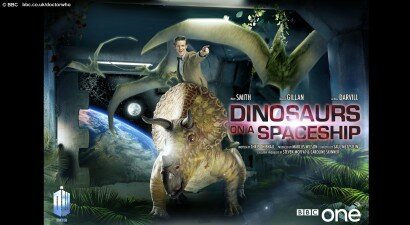
Lost in the news that Chris Chibnall will be the new “showrunner” for Doctor Who in 2018 (following one last Moffat season in Spring 2017) is the peculiar significance of the 2016 Christmas special. Yes, the special will very likely feature the debut of a brand new companion so it will be notable for that; and it will definitely be the first new story in a year (meaning that people who do Doctor Who marathons of the new series or even the whole show will be watching Christmas specials back-to-back) so it will also be notable for that.
But here’s the tradition that gets continued - since Doctor Who was created, it has always broadcast a bona fide new story on television in the “6” year of the decade. There has been new Doctor Who stories on television in 1966, 1976, 1986, 1996 and 2006 - five straight decades. It has been the only year of each decade you can say that because 1996 was the only year of the 1990’s that featured a proper, bona fide new Doctor Who story broadcast on television (no, I’m not counting the charity episodes broadcast in 1993 and 1999, respectively, as fun as they were). So had they skipped 2016 entirely, that would have ended the “6” tradition. Instead, for the sixth decade in a row, there will be a new Doctor Who story broadcast in the “6” year of the decade.
In the meantime, let the debates about Chibnall’s appointment as the new showrunner begin…...
Posted by Luca on Friday, January 22 at 11:25 pm
December 25, 2015
How to Get Ahead in Marriage

So, come all ye faithful and let us know what ye thought of this year’s Doctor Who Christmas special, The Husbands of River Song. Too much of a romp? Not enough of a romp? Too many husbands? Not enough Rivers? This may be the last new episode (on television at least) for nearly a year, so don’t rush, take your time, polish off that leftover turkey, and let us know what you thought in the comments section below.
Posted by Luca on Friday, December 25 at 10:58 pm
December 05, 2015
Line in the Sand

So what did you all think of the finale? How many of you predicted that ending? How many fan fiction novels do you think will be written because of that ending? How many actors who once appeared in The Sea Devils did you recognize in the episode? What did you think of Me? (I don’t mean the person writing this blog, I mean the character also known as Ashildr)? Was the Doctor violent enough for you or not enough? Which TARDIS console room did you prefer?
So many questions that can be asked, and only another three weeks until the next episode (don’t get used to that regularity of new episodes when we hit 2016 by the way). Let us know the answers and whatever else you may have thought in the comments section below.
Posted by Luca on Saturday, December 5 at 10:09 pm
November 28, 2015
A Tower Struck Down
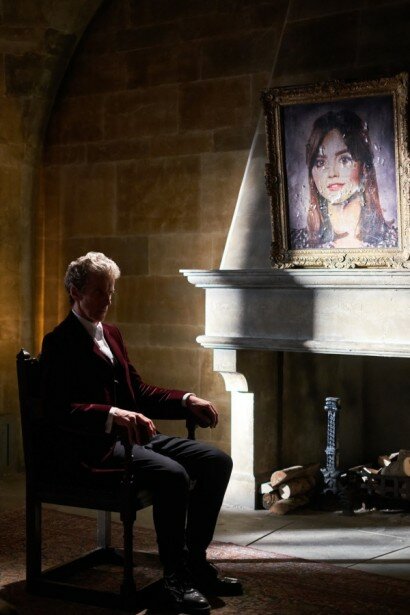
We want your confession - in particular we want you to confess what you thought of this episode. You don’t have to dial in however, you can just leave your comments appropriate section below. Was this episode a diamond in the rough or did it make you feel like you wanted to jump in a lake? Or was it a hybrid of the two?
Posted by Luca on Saturday, November 28 at 9:32 pm
November 21, 2015
Thus Quoth the Raven Nevermore

It might be premature to ask people what they thought of this episode because it might be akin to asking people to judge the first two episodes of a six-part classic series story. Or maybe it’ s the equivalent of a four-part classic series story. We just don’t know. But don’t let that stop you - let us know what you thought of Face the Raven in the comments section below.
Posted by Luca on Saturday, November 21 at 11:01 pm
November 14, 2015
Go To Sleep

Well how was that for experimental and high concept? Did you enjoy that or did it, ironically, put you to sleep? Will we see the repercussions from the events of this episode some time in the future, or was that it? And exactly where did that opening title sequence go?
Give your eyes a rub, shake the dust out and let us know what you thought in the comments section below.
Posted by Luca on Saturday, November 14 at 10:21 pm

The Doctor Who Blog is a collaborative weblog put together by the people at the Doctor Who Information Network that bring you Enlightenment, the most dangerous Doctor Who fanzine in the world.
The Doctor Who Blog's mission is to provide witty and insightful commentary on the world of Doctor Who in all its various forms. And to make several bad puns and references to jokes Tom Baker once made.
To Monthly Archives
Recent Entries
- Happy 53rd Anniversary
- Top of the Class?
- Fan Myth RIP #3 - Celebrity Guest Casting is and was “bad” for Doctor Who
- Animated Curiosity
- Fan Myth RIP #2 - William Hartnell Was Playing Himself
- Fan Myth RIP #1 - Continuity Kills
- Head of the Class
- The Companion Departures Extra: Clara Oswald
- The Companion Departures - #1: Adric
- The Companion Departures - #2: Jo Grant
- The Companion Departures - #3: Victoria Waterfield
- The Companion Departures - #4: Romana
- The Companion Departures - #5: Perpugiliam (Peri) Brown
- The Companion Departures - #6 - Nyssa
- Coming up Sixes